

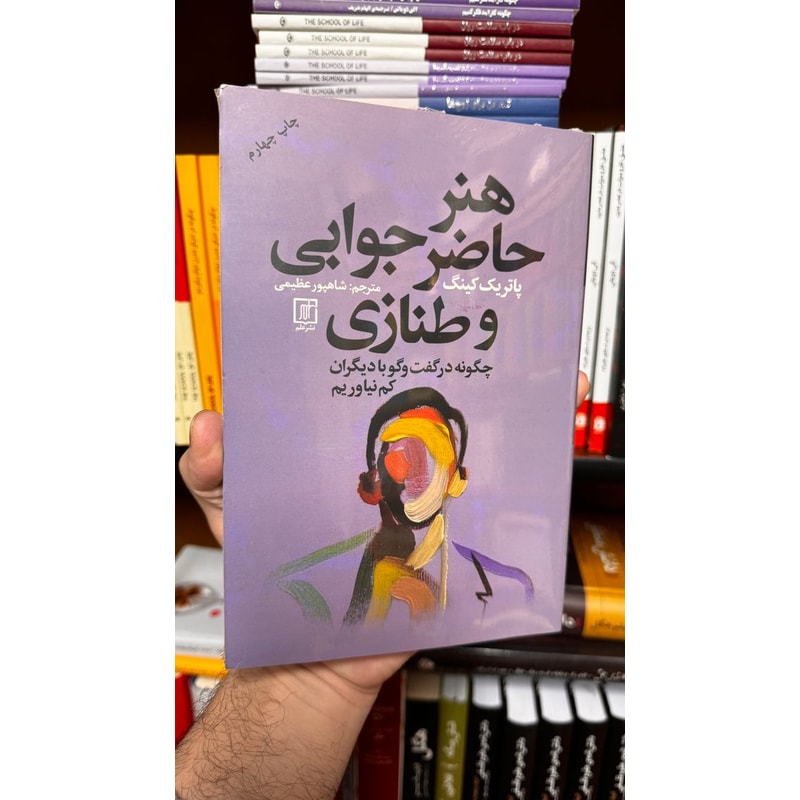

هنر حاضر جوابی و طنازی
The Art of Witty Banter
$ 18,00
«هنر حاضر جوابی و طنازی» اثر پاتریک کینگ (Patrick King) با ترجمهٔ شاهپور عظیمی (Shahpur Azimi) از نشر علم، تمرینهایی برای پرسش دقیق، تداعی آزاد، بداههگویی، شوخی دوستانه و پاسخ سریع ارائه میکند. عنوان، نقشها، ناشر و شابک تأیید شدهاند؛ مشخصات چاپی کالای موجود تا تطبیق شناسنامه قطعی نیست.
The Art of Witty Banter by Patrick King, translated into Persian by Shahpur Azimi for Elm Publishing, offers practice in specific questions, free association, improvisation, good-natured teasing and quicker responses. Title, roles, publisher and ISBN are confirmed; print-specific details remain unsettled until the stocked copy is checked.
موجود (می توان پیش خرید کرد)
معرفی کتاب هنر حاضر جوابی و طنازی
«هنر حاضر جوابی و طنازی» نوشتهٔ پاتریک کینگ (Patrick King) و ترجمهٔ شاهپور عظیمی (Shahpur Azimi) است و نشر علم آن را به فارسی منتشر کرده است. زیرعنوان فارسی این نسخه «چگونه در گفتوگو با دیگران کم نیاوریم» و شابک آن 978-622-246-284-0 است. در بازار کتاب ایران، نام اصلی اثر فقط «هنر حاضر جوابی و طنازی» است؛ زیرعنوان، نام نویسنده و نام مترجم نباید به H1 چسبانده شوند.
موضوع کتاب این است که شوخطبعی، بداههگویی و ادامهدادن یک گفتوگوی زنده را میتوان مانند مهارت تمرین کرد. اثر مجموعهای از الگوهای گفتوگویی میدهد تا خواننده از پاسخهای یککلمهای، پرسشهای خشک و سکوتهای معذبکننده عبور کند؛ اما هیچ تکنیکی جای توجه واقعی به مخاطب و موقعیت را نمیگیرد.
عنوان انگلیسی و تفاوت ویرایشها
عنوان شناختهشدهٔ انگلیسی اثر The Art of Witty Banter است. رکوردهای کتابشناختی دستکم دو صورت کاملتر را ثبت کردهاند: The Art of Witty Banter: Be Clever, Quick, & Magnetic برای یک ویرایش جدیدتر و The Art of Witty Banter: Be Clever, Be Quick, Be Interesting — Captivating Conversation برای یک ویرایش قدیمیتر.
این تفاوت عنوان فرعی و چیدمان فصلها به معنی دو کتاب کاملاً بیارتباط نیست، اما نباید جزئیات یک ویرایش انگلیسی را بدون شناسنامه به کالای فارسی موجود نسبت داد. برای همین عنوان دوم محصول به شکل پایدار و کوتاه The Art of Witty Banter ثبت میشود. بعضی فهرستها صورت پیوستهٔ «هنر حاضرجوابی و طنازی» را به کار میبرند، اما روی جلد کالای الفبا و در چند فهرست دقیق همین شابک، صورت فاصلهدار «هنر حاضر جوابی و طنازی» دیده میشود و همان H1 اصلی است.
چرا بعضی گفتوگوها ناگهان متوقف میشوند؟
پرسش بسیار کلی مانند «چه خبر؟» بار پاسخ را یکباره روی دوش مخاطب میگذارد. پرسش دقیقتر، اشاره به چیزی که همین حالا گفته شده یا انتخاب یک جزئیات مشترک، نقطهٔ شروع روشنتری میسازد. هدف بازجویی نیست؛ هر پاسخ باید راهی برای واکنش، تجربهٔ شخصی یا پرسش بعدی باز کند.
گفتوگوی خوب تعادل دارد. اگر فقط سؤال بپرسیم، فضا شبیه مصاحبه میشود؛ اگر فقط داستان خودمان را تعریف کنیم، طرف مقابل حذف میشود. مهارت اصلی ساختن رفتوبرگشت است: شنیدن، گرفتن یک رشته از حرف قبلی و افزودن چیزی که پاسخدادن به آن آسان باشد.
تداعی آزاد: پیدا کردن رشتهٔ بعدی
تداعی آزاد یعنی از یک واژه، تصویر، مکان یا احساس در جملهٔ قبلی، پیوندی طبیعی برای ادامه پیدا کنیم. لازم نیست ارتباط درخشان باشد؛ کافی است قابلفهم باشد و امکان بازگشت به موضوع اصلی را نگه دارد. تمرین این مهارت فشار «باید فوراً حرفی خیلی هوشمندانه بزنم» را کم میکند.
یک روش عملی این است که برای یک واژه سه مسیر بنویسیم: خاطره، پرسش و مشاهده. سپس کوتاهترین مسیر مناسب موقعیت را انتخاب کنیم. سرعت از ذخیرهٔ جملههای ازپیشساخته نمیآید؛ از دیدن گزینههای بیشتر در لحظه میآید.
«ما در برابر دنیا» و ساختن همدلی بازیگوشانه
یکی از الگوهای کتاب ساختن یک اتحاد خیالی و سبک دربارهٔ موقعیتی مشترک است؛ مثلاً هر دو نفر برای لحظهای همتیمی شوند و یک دردسر کوچک روزمره را با اغراق دوستانه توصیف کنند. این بازی میتواند فاصله را کم کند، چون بهجای رقابت، حس همراهی میسازد.
مرز آن مهم است: همدلی نباید با تحقیر شخص سوم، گروه اجتماعی یا ویژگی حساس ساخته شود. اگر شوخی هزینهاش را فرد غایب یا آسیبپذیر میدهد، صمیمیت ظاهری روی بیاحترامی بنا شده است.
نقشبازی و شکستن «دیوار چهارم»
نقشبازی کوتاه، موقعیت عادی را به یک سناریوی مشترک تبدیل میکند: دو نفر میتوانند برای چند جمله وانمود کنند منتقد غذا، کارآگاه یا میزبان یک برنامهاند. شکستن دیوار چهارم نیز یعنی با لحنی بازیگوشانه به خودِ گفتوگو اشاره کنیم؛ مثلاً بگوییم «این بخش مصاحبه خیلی جدی شد» و مسیر را نرم عوض کنیم.
این ابزارها وقتی خوب کار میکنند که هر دو نفر نشانههای بازی را بفهمند. اگر مخاطب گیج، ساکت یا ناراحت شد، توضیح کوتاه و بازگشت به گفتوگوی عادی بهتر از اصرار بر اجرای تکنیک است.
داستانهای پشتیبان و رزومهٔ گفتوگو
داشتن چند داستان کوتاه واقعی دربارهٔ سفر، اشتباه، کشف یا موقعیت روزمره میتواند هنگام افت ریتم کمک کند. داستان پشتیبان متن حفظی برای نمایش نیست؛ باید کوتاه، مرتبط و دارای جایی برای ورود مخاطب باشد. جزئیات غیرضروری حذف میشوند و نقطهٔ اصلی زودتر میآید.
«رزومهٔ گفتوگو» را میتوان فهرستی ذهنی از موضوعهایی دانست که واقعاً تجربه یا کنجکاوی دربارهٔ آنها داریم. این ذخیره با زندگیکردن، خواندن و توجه به دیگران ساخته میشود، نه با وانمودکردن به دانشی که نداریم.
تعریف مؤثر و تبدیل مخاطب به صاحبنظر
تعریف کلی مثل «عالی بود» خوشایند است، اما تعریف دقیق—چه چیزی خوب بود و چرا توجه ما را گرفت—باورپذیرتر است و راه گفتوگو را باز میکند. تعریف نباید بدهی عاطفی بسازد یا پوششی برای درخواست بعدی باشد.
وقتی طرف مقابل تجربهای واقعی دارد، میتوان او را صاحبنظر کرد: بهجای رقابت در دانستن، از او بخواهیم فرایند، انتخاب یا تفاوتی را توضیح دهد. کنجکاوی صادقانه هم اطلاعات تازه میدهد و هم فشار اجرا را از روی هر دو نفر کم میکند.
شوخی دوستانه، مرزها و رضایت
شوخی و دستانداختن فقط وقتی دوستانه است که رابطه، لحن و واکنش مخاطب آن را تأیید کند. موضوعهای مربوط به بدن، هویت، سوگ، آسیب، ناتوانی، باور و ناامنی شخصی جای آزمون بیاجازه نیستند. رابطهٔ نزدیک نیز مجوز دائمی نمیسازد؛ مرزها با موقعیت تغییر میکنند.
قاعدهٔ امن این است که شوخی را سبک و قابلبازگشت نگه داریم، واکنش را ببینیم و با اولین نشانهٔ ناراحتی متوقف شویم. عذرخواهی روشن بهتر از توضیح طولانی دربارهٔ نیت است. طنازی موفق باید به رابطه ارزش اضافه کند، نه اینکه مخاطب را وادار به تحمل کند.
ساختن پاسخ سریع بدون حفظکردن جوابهای آماده
پاسخ حاضر الزاماً پاسخ تند نیست. میتوان جملهٔ طرف مقابل را با اغراق بیخطر، تفسیر غیرمنتظره، مقایسه یا پرسش کوتاه بازتاب داد. مکث یکثانیهای برای انتخاب لحن اغلب بهتر از واکنش فوریای است که رابطه را خراب میکند.
تمرین مفید، نوشتن سه پاسخ متفاوت برای یک موقعیت پس از پایان آن است: یک پاسخ گرم، یک پاسخ بازیگوش و یک پاسخ مرزبندیشده. هدف پشیمانی از گذشته نیست؛ ساختن گزینههایی است که در موقعیت بعدی سریعتر در دسترس باشند.
تمرین مرحلهای کتاب
یک مهارت را برای یک هفته انتخاب کنید. ابتدا فقط مشاهده کنید چه زمانی گفتوگو افت میکند. سپس در موقعیتی کمریسک یک پرسش دقیق یا تداعی کوتاه به کار ببرید. بعد نتیجه را بنویسید: آیا طرف مقابل بیشتر مشارکت کرد؟ آیا لحن طبیعی بود؟ کجا باید کوتاهتر یا مستقیمتر میبودید؟
بهبود گفتوگو با تعداد تکنیکها سنجیده نمیشود. نشانهٔ بهتر، توجه بیشتر، قطعکردن کمتر، پرسشهای مرتبطتر و توانایی پذیرفتن سکوت یا پایان طبیعی مکالمه است.
مرزهای کتاب و خواندن انتقادی
این اثر راهنمای عمومی ارتباط است، نه درمان اضطراب اجتماعی، اختلال گفتار یا مسئلهٔ سلامت روان. برای ناراحتی پایدار یا اختلال جدی در زندگی روزمره، ارزیابی متخصص واجدصلاحیت مناسبتر از تکیه بر یک کتاب خودیاری است.
هنجارهای شوخی، تماس چشمی، سرعت پاسخ و صمیمیت در فرهنگها، زبانها و موقعیتهای حرفهای متفاوتاند. تکنیک باید با رابطه، قدرت، امنیت و رضایت سازگار شود. کتاب میتواند گزینههای گفتوگویی را بیشتر کند؛ جذابیت، دوستی یا موفقیت اجتماعی را تضمین نمیکند.
ترجمهٔ فارسی نشر علم
در این نسخه پاتریک کینگ (Patrick King) نویسنده و شاهپور عظیمی (Shahpur Azimi) مترجم فارسی است. پیوند نویسنده با نقش author و پیوند مترجم با نقش translator ثبت میشود؛ نام مترجم نباید ویژگی rel=”author” بگیرد.
عنوان، زیرعنوان، نام نویسنده، نام مترجم، نشر علم و شابک در جلد و فهرستهای بازار همخواناند. در مقابل، تعداد صفحه، سال و نوبت چاپ، نوع جلد و ابعاد کالای موجود فقط پس از تطبیق شناسنامه و بررسی مستقیم همان نسخه قطعی میشوند؛ بنابراین این موارد تا بررسی نسخهٔ فیزیکی به محصول نسبت داده نمیشوند.
این کتاب برای چه خوانندهای مناسب است؟
کتاب برای خوانندهای مناسب است که تمرینهای کوتاه و الگوهای مشخص برای شروع و ادامهٔ گفتوگو میخواهد: از معاشرت روزمره و دوستی تا شبکهسازی و موقعیتهای کاری کمریسک. خوانندهای که دنبال پژوهش دانشگاهی جامع یا درمان بالینی است باید از منابع تخصصی مکمل استفاده کند.
بهترین استفاده، انتخاب گزینشی است: یک الگو را امتحان کنید، واکنش واقعی طرف مقابل را معیار قرار دهید و چیزی را که با شخصیت یا فرهنگ رابطه سازگار نیست کنار بگذارید. هدف طبیعیترشدن گفتوگوست، نه اجرای نمایشی مجموعهای از ترفندها.
مشخصات کتاب | Book Details
| عنوان دقیق فارسی / Exact Persian Title | هنر حاضر جوابی و طنازی |
|---|---|
| زیرعنوان فارسی / Persian Subtitle | چگونه در گفتوگو با دیگران کم نیاوریم |
| عنوان انگلیسی / English Title | The Art of Witty Banter |
| عنوان کامل یک ویرایش جدیدتر / Newer English Edition Title | The Art of Witty Banter: Be Clever, Quick, & Magnetic |
| عنوان کامل یک ویرایش قدیمیتر / Earlier English Edition Title | The Art of Witty Banter: Be Clever, Be Quick, Be Interesting — Captivating Conversation |
| نویسنده / Author | پاتریک کینگ (Patrick King) |
| مترجم فارسی / Persian Translator | شاهپور عظیمی (Shahpur Azimi) |
| ناشر نسخهٔ فارسی / Persian Publisher | نشر علم / Elm Publishing (Nashr-e Elm) |
| شابک / ISBN | 978-622-246-284-0 |
| زبان نسخه / Edition Language | فارسی / Persian |
| موضوع / Subjects | مهارت گفتوگو، بداههگویی، شوخطبعی، گوشدادن و ارتباط بینفردی / conversation skills, improvisation, humour, listening and interpersonal communication |
| مشخصات نسخهٔ موجود / Stock-copy Details | تعداد صفحه، سال و نوبت چاپ، نوع جلد و ابعاد کالای موجود فقط پس از تطبیق شناسنامه و بررسی مستقیم همان نسخه قطعی میشوند / Pagination, the stocked copy’s publication year and printing, binding and physical dimensions require its colophon and direct inspection |
About The Art of Witty Banter
The Art of Witty Banter is written by Patrick King and translated into Persian by Shahpur Azimi. Elm Publishing / Nashr-e Elm publishes this Persian edition under ISBN 978-622-246-284-0. Its exact Persian market title is هنر حاضر جوابی و طنازی, while چگونه در گفتوگو با دیگران کم نیاوریم is the subtitle; neither the creator names nor the subtitle should be appended to the Persian H1.
The book treats wit, improvisation and conversational momentum as skills that can be practised. It offers patterns for moving beyond one-word replies, rigid questions and awkward pauses, while attention to the other person and the actual setting remains more important than any technique.
English title and edition variants
The established English title is The Art of Witty Banter. Bibliographic records preserve at least two expanded forms: The Art of Witty Banter: Be Clever, Quick, & Magnetic for a newer edition, and The Art of Witty Banter: Be Clever, Be Quick, Be Interesting — Captivating Conversation for an earlier one.
These subtitle and arrangement differences do not make the editions unrelated, but details from one English edition must not be assigned to the stocked Persian copy without its colophon. The product therefore uses the stable short English title as its secondary title. Some catalogues join the Persian compound as هنر حاضرجوابی و طنازی; the AlefBa stock cover and several exact-ISBN listings show the spaced form هنر حاضر جوابی و طنازی, which is retained as the H1.
Why conversations stall
A broad question such as “What’s new?” transfers the entire burden of direction to the other person. A specific question, a detail from what was just said, or a shared observation creates a clearer starting point. The goal is not interrogation: every answer should open room for a response, a personal contribution or the next relevant question.
Balance matters. Questions alone can feel like an interview; stories told without room for reply erase the listener. Useful conversation moves back and forth—listen, pick up a thread, then add something that is easy and worthwhile to answer.
Free association and the next conversational thread
Free association means using a word, image, place or feeling in the previous sentence as a natural bridge. The link need not be brilliant. It needs to be understandable and to leave a route back to the main subject. Practice reduces the pressure to produce an exceptionally clever line on demand.
One exercise is to give a word three routes: a memory, a question and an observation. Choose the shortest route suitable for the setting. Speed comes less from stock phrases than from seeing more than one available option.
“Us against the world” as playful alignment
One pattern creates a light imaginary alliance around a shared circumstance. Two people briefly become teammates and exaggerate a minor everyday inconvenience. Used gently, it can reduce distance because it replaces competition with a moment of cooperation.
The boundary is essential. Rapport should not depend on humiliating a third person, a social group or a sensitive characteristic. If an absent or vulnerable person pays the price of the joke, the apparent closeness rests on disrespect.
Role-play and breaking the fourth wall
Brief role-play turns an ordinary situation into a shared scene: for a few lines, two people might act as food critics, detectives or television hosts. Breaking the fourth wall means playfully acknowledging the conversation itself—“this interview has become very serious”—and changing direction without pretending nothing happened.
These tools work when both people recognise the invitation. If the listener looks confused, quiet or uncomfortable, a short clarification and return to ordinary conversation is better than insisting on the bit.
Fallback stories and a conversation résumé
A few short, truthful stories about travel, mistakes, discoveries or ordinary life can help when momentum drops. A fallback story is not a memorised performance. It should be brief, relevant and leave a clear point where the listener can enter; unnecessary detail goes, and the point arrives early.
A “conversation résumé” can be understood as a mental list of subjects about which one has real experience or curiosity. It grows through living, reading and paying attention to others—not through pretending to possess knowledge one does not have.
Specific compliments and making the other person the expert
A general “that was great” is pleasant, but a specific compliment—what worked and why it caught your attention—is more credible and opens a path forward. A compliment should not create emotional debt or disguise a request that follows.
When the other person has genuine experience, make them the expert. Instead of competing to know more, ask them to explain a process, choice or difference. Honest curiosity produces new information and removes some performance pressure from both sides.
Good-natured teasing, boundaries and consent
Teasing is good-natured only when the relationship, tone and listener’s response support it. Bodies, identity, grief, trauma, disability, belief and personal insecurity are not material for an uninvited test. Closeness is not permanent permission; boundaries change with context.
Keep a joke light and reversible, observe the response and stop at the first sign of discomfort. A clear apology is better than a long defence of intention. Successful banter should add value to the relationship, not demand endurance from the listener.
Faster responses without memorising comebacks
A quick response need not be sharp or hostile. A speaker can reflect the previous line through harmless exaggeration, an unexpected interpretation, a comparison or a short question. A one-second pause to choose tone is often better than an immediate reaction that damages the relationship.
After a situation, write three possible replies: one warm, one playful and one boundary-setting. The purpose is not regret. It is to build options that become easier to retrieve in a future conversation.
A staged practice method
Select one skill for a week. First observe where conversations lose momentum. Then use one specific question or short association in a low-risk setting. Record the result: did the other person participate more, did the tone feel natural, and where should the response have been shorter or more direct?
Improvement is not measured by the number of techniques deployed. Better signs are closer attention, fewer interruptions, more relevant questions, and the ability to accept silence or the natural end of a conversation.
Limits and critical reading
This is a general communication guide, not treatment for social anxiety, a speech disorder or a mental-health condition. Persistent distress or serious disruption to daily life calls for assessment by an appropriately qualified professional rather than reliance on a self-help title.
Norms around humour, eye contact, speed and intimacy vary across cultures, languages and professional settings. A technique must fit the relationship, power balance, safety and consent. The book may increase conversational options; it cannot guarantee charisma, friendship or social success.
The Elm Publishing Persian translation
In this edition, Patrick King is the author and Shahpur Azimi is the Persian translator. The author link carries the author role, while the translator link carries the translator role and must never receive rel="author".
The title, subtitle, author, translator, Elm Publishing and ISBN agree across the visible cover and market records. By contrast, Pagination, the stocked copy’s publication year and printing, binding and physical dimensions require its colophon and direct inspection; those values are therefore omitted until the physical copy is verified.
Who may appreciate this book?
It may suit readers seeking short exercises and explicit patterns for beginning and sustaining conversation—from everyday socialising and friendship to networking and low-risk workplace settings. Readers needing comprehensive academic research or clinical treatment should use specialist sources alongside it.
The strongest use is selective: test one pattern, treat the other person’s real response as evidence, and discard what does not fit the relationship, culture or one’s own manner. The aim is more natural conversation, not a performance made from accumulated tricks.
نظر، اصلاح و تکمیل محتوا
اصلاح اطلاعات یا ارسال نظر درباره این کتاب
اصلاح اطلاعات یا ارسال نظر درباره کتاب «هنر حاضر جوابی و طنازی»
اگر درباره مشخصات، تاریخها، نامها، منابع یا محتوای این صفحه اصلاح مستندی دارید، لطفاً پیام خود و منبع اطلاعات را ارسال کنید. پیامها پیش از اعمال تغییر بررسی میشوند.
If you have a documented correction, reliable source or additional information about this page, please send it below. All submissions are reviewed before any changes are made.
.فقط مشتریانی که این محصول را خریداری کرده اند و وارد سیستم شده اند میتوانند برای این محصول دیدگاه(نظر) ارسال کنند.



نقد و بررسیها
هنوز بررسیای ثبت نشده است.